What changed, counted
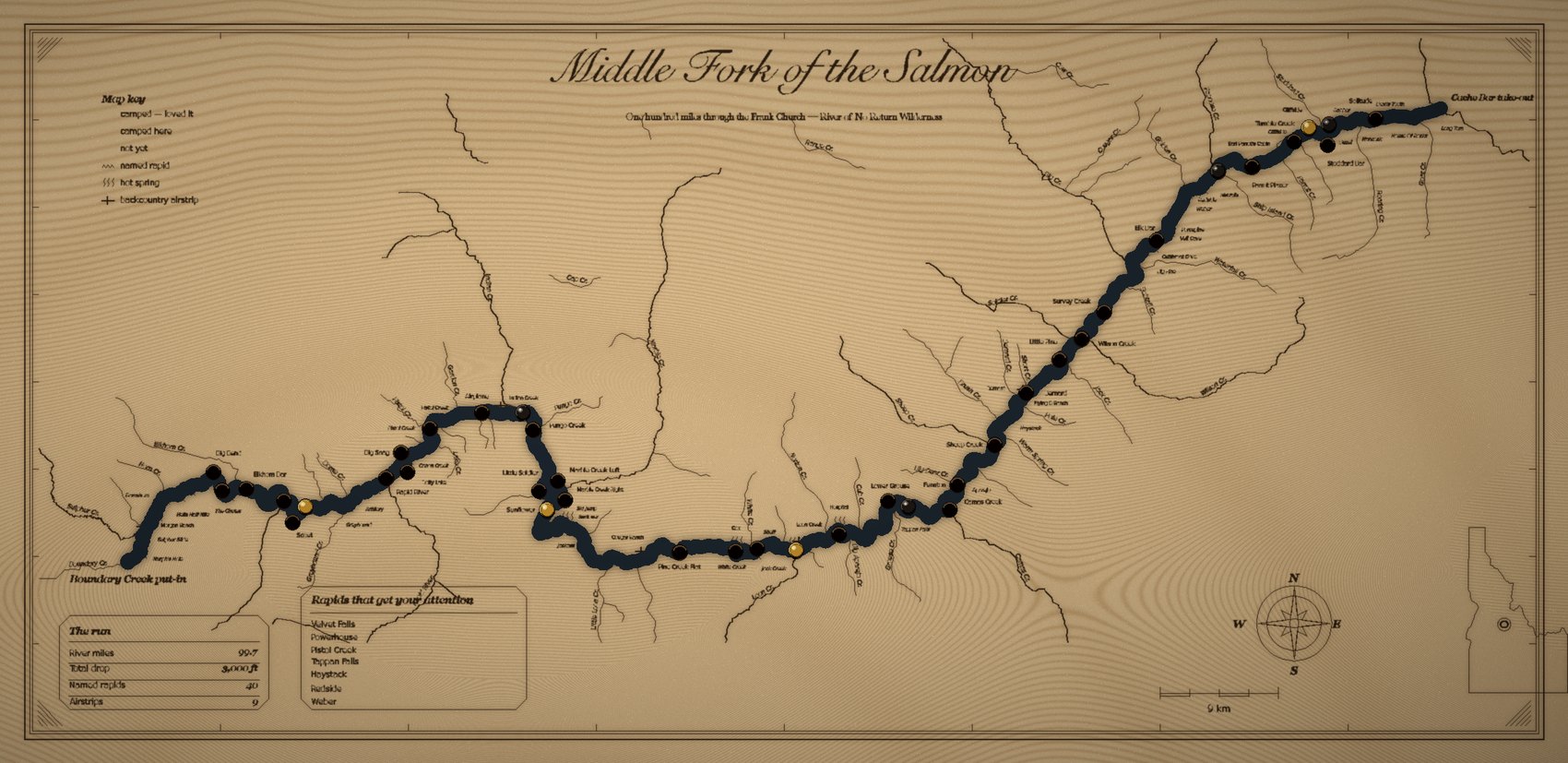
Board 01 · 24 × 18 birch
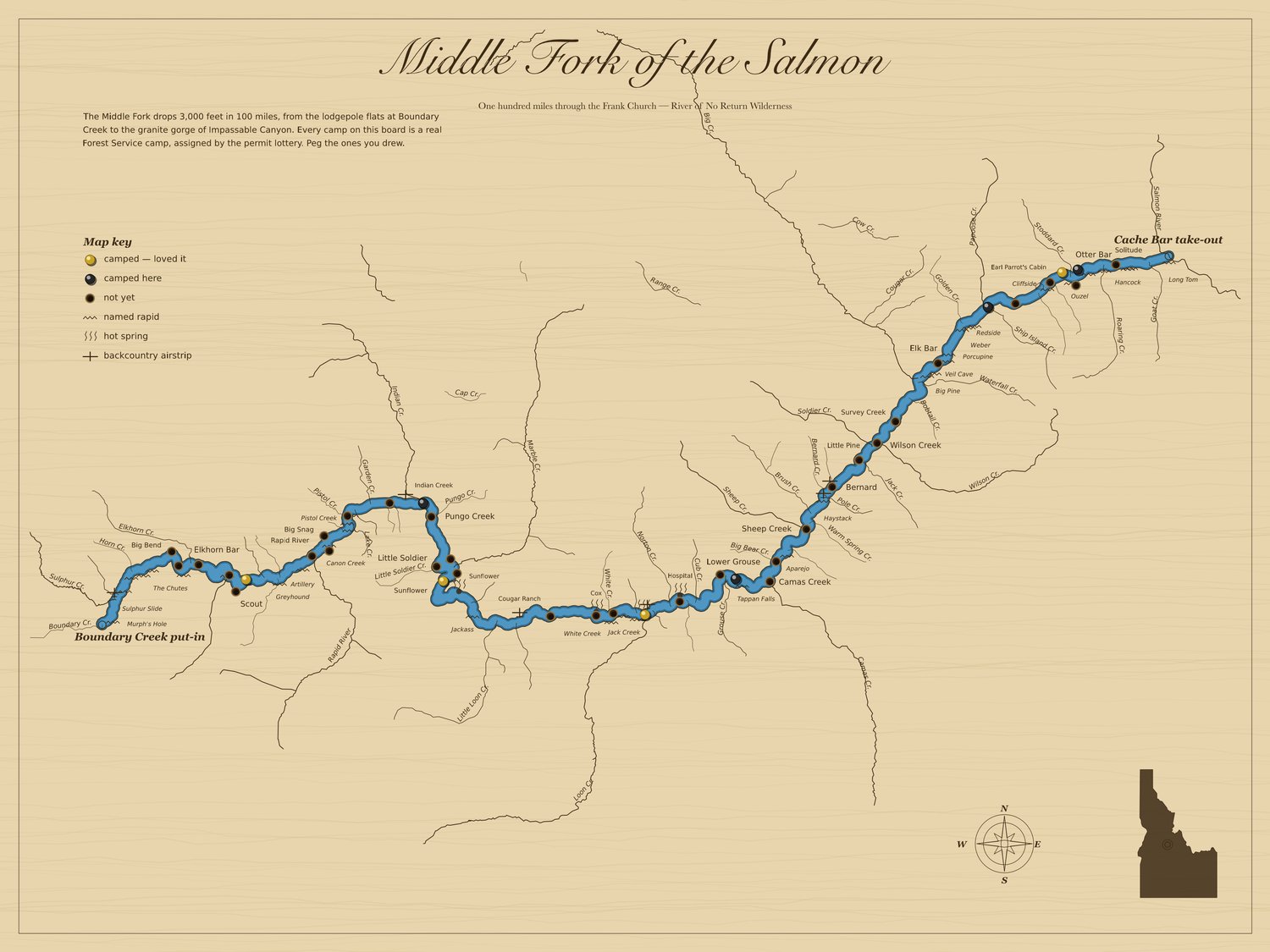
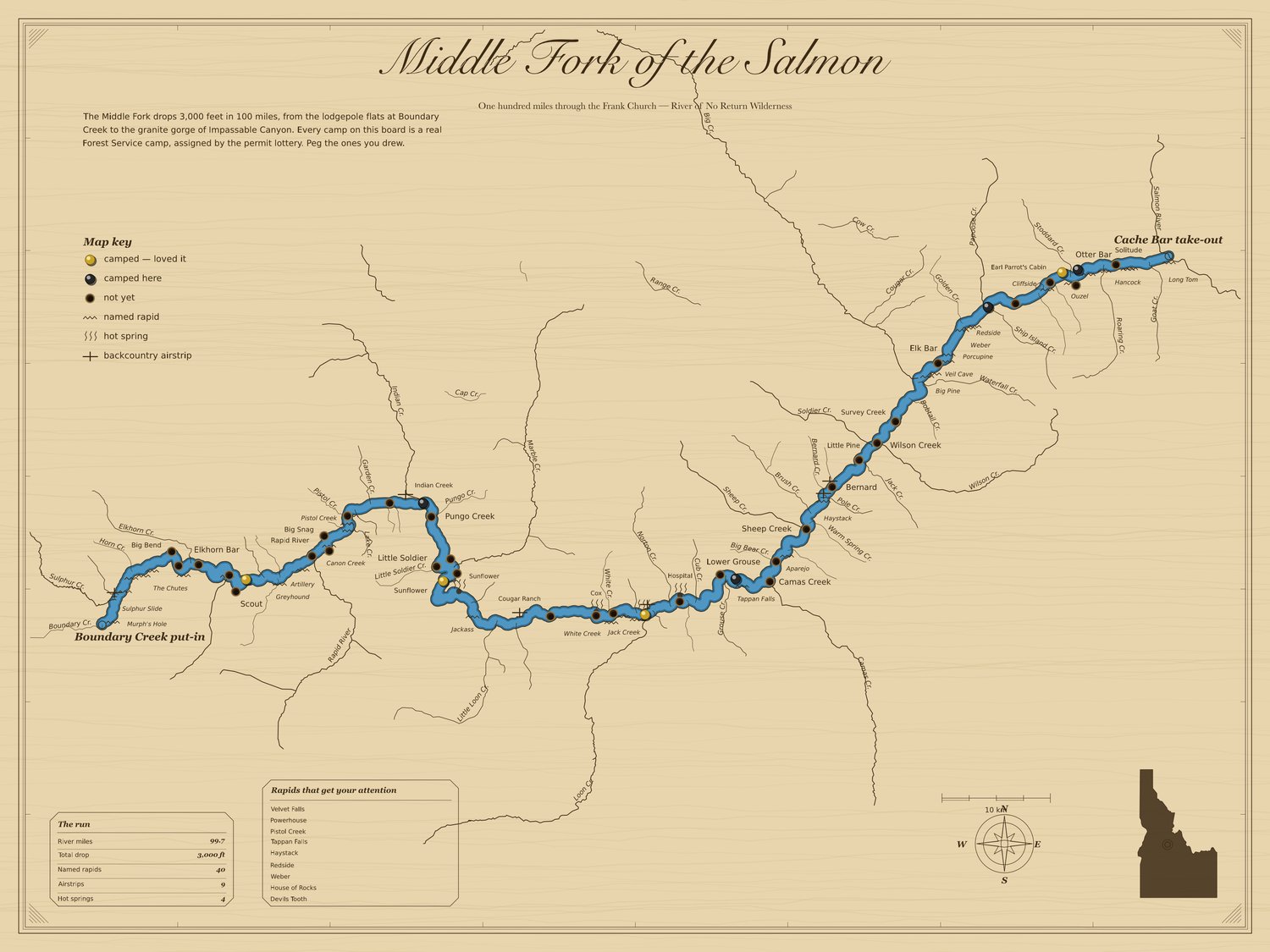
Middle Fork of the Salmon
The river runs corner to corner and left roughly a third of the board bare. Nothing framed it, and nothing filled it.
Board 02 · 24 × 18 birch
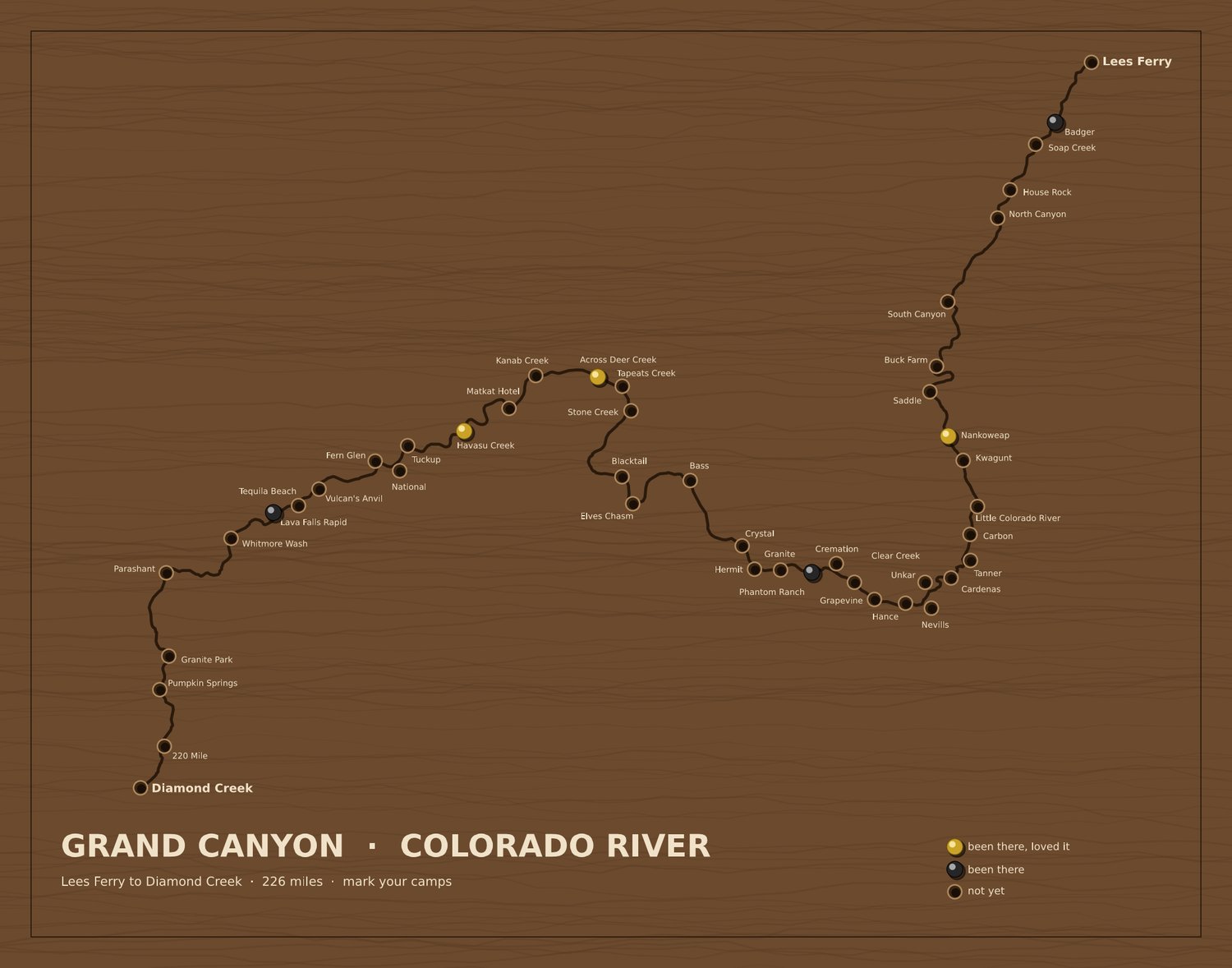
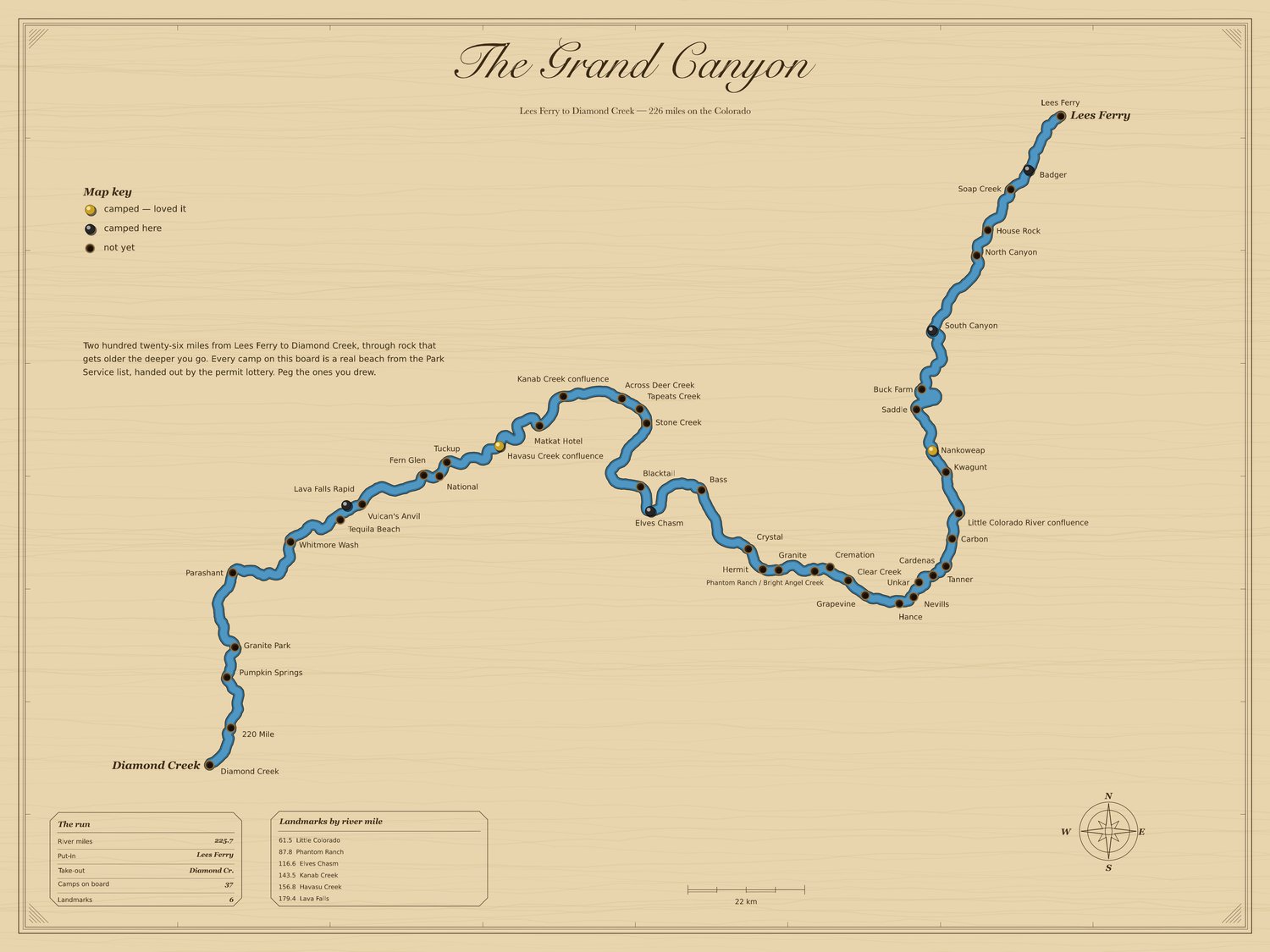
The Grand Canyon
Existed only as an old first-generation board — no border system, no panels, no landmark context.
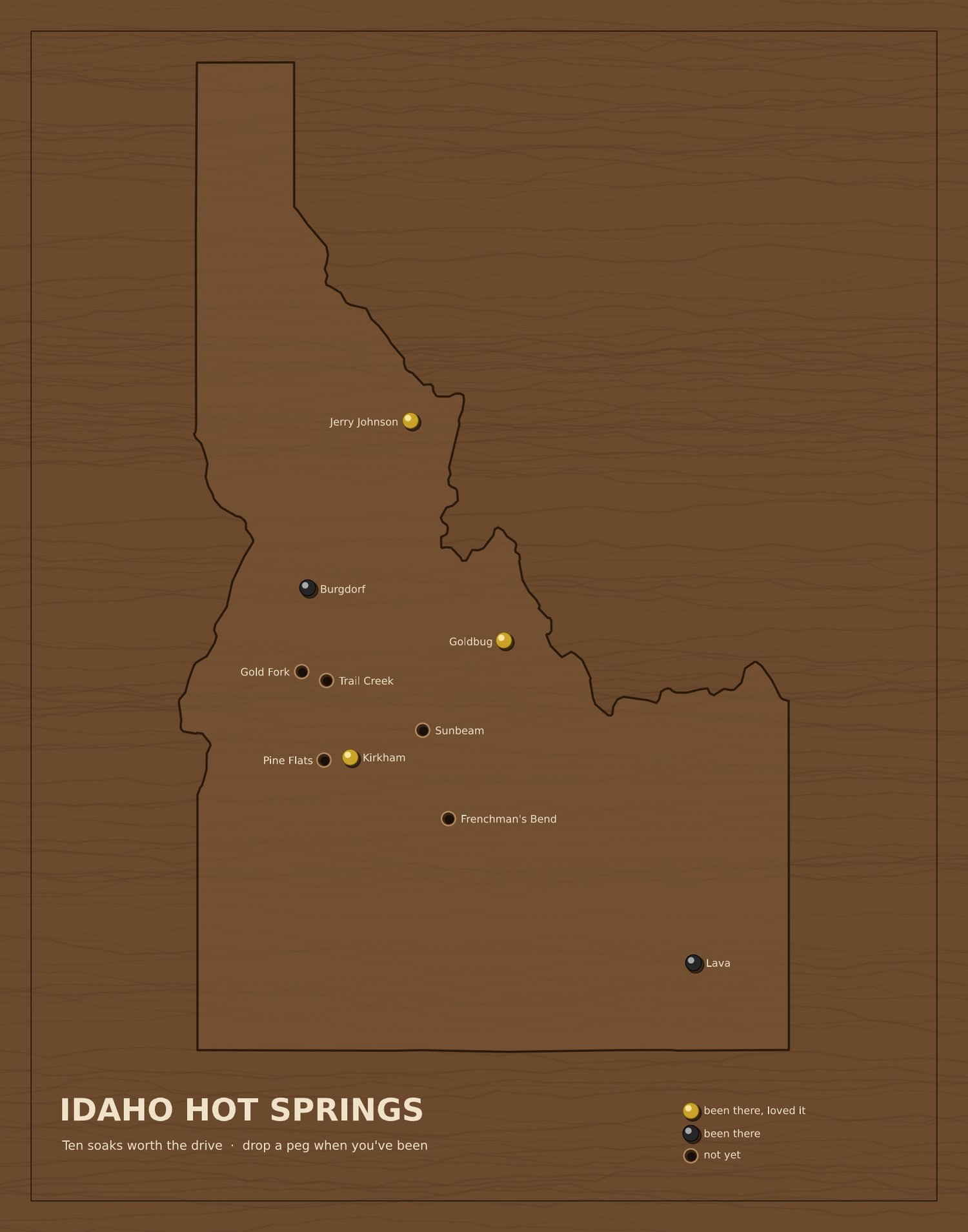
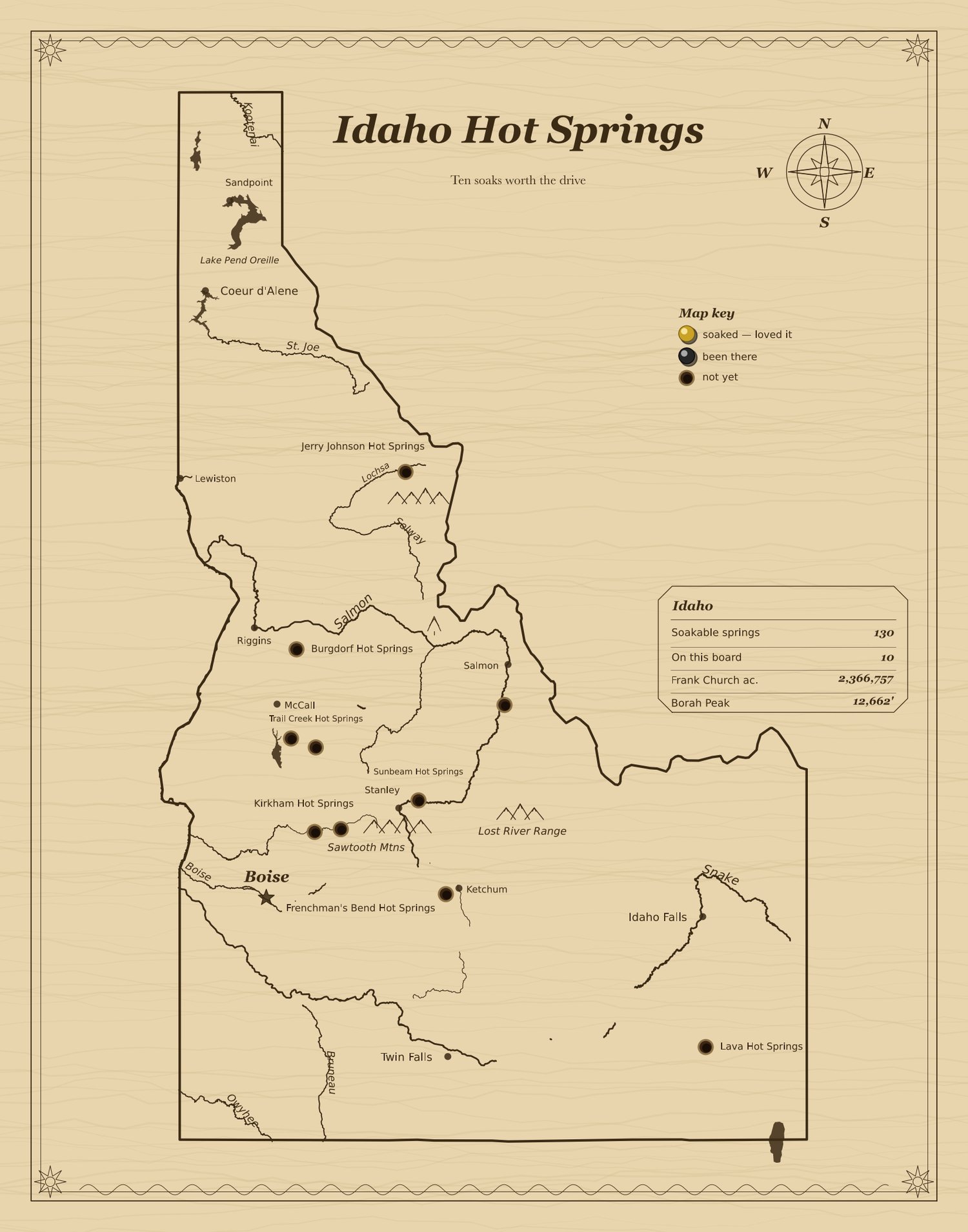
Board 03 · 11 × 14 birch
Idaho Hot Springs
The sparsest of the set: a bare state outline, ten dots, and a large empty interior.
Three findings that carried the rebuild
The border was one line of code
The entire frame treatment was a single rectangle appended to the engrave list. Every board inherited it. That one line is why all three read as unfinished, regardless of how good the underlying data was.
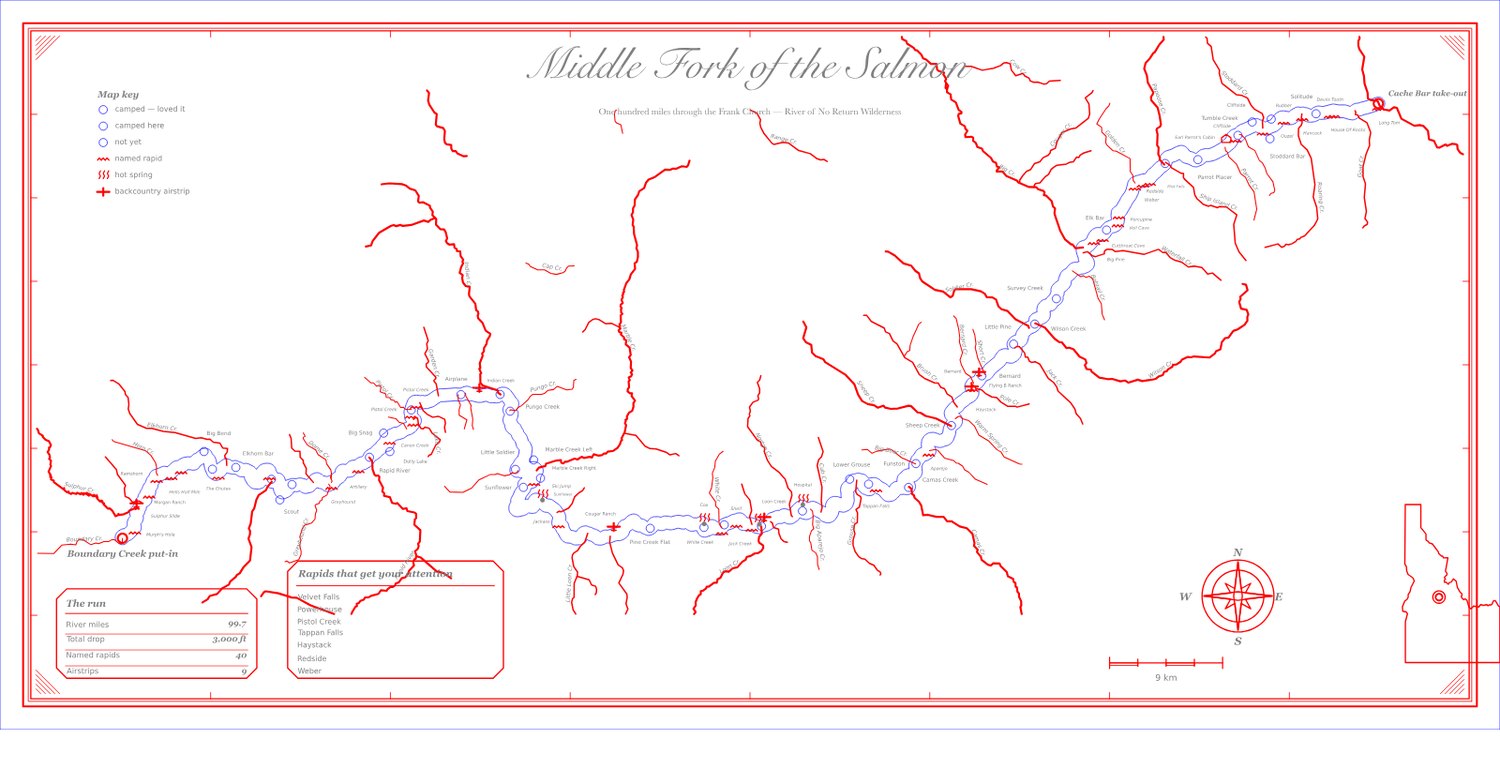
Eyeballing the mockup put panels on the river
First placement collided with the map because I guessed coordinates from an image. Built a free-space prober that prints a 10mm occupancy grid of the board; every panel since is placed against measured empty space.
A fabricated number got caught
An early stats panel claimed "4.5M wilderness acres." The real figure is 2,366,757 per BLM and USFS. Corrected, with the citation written into the theme file next to the value.
Every board was rendering as the dark tone
The grain blend weighted to ~1.4, so the mix factor saturated and the wood's base colour was almost never shown — birch came out muddy brown no matter what the setting said. Sampled RGB confirmed it: mean luma 78 against a birch base of 222,193,148. Rebalanced to ~0.5; luma now 150 and all three boards match within one point.
Making a real one
The test board
Getting a physical unit made turned out to be a sizing problem before it was a money problem.
What's still weak
Before this goes near a customer.
- No price yet. Ponoko only quotes after upload and the order isn't placed. A smaller, simpler board came to ~$102 earlier — this one should cost more, but I have no verified figure.
- The orderable board isn't the one in the photos. 584 × 284 mm is letterbox; the product renders are the 24 × 18 poster. Same design, noticeably different object.
- The macro crop is the weakest render. Grain is finer and more regular than real timber at that magnification. Convincing at hero scale; would not survive side-by-side with a real photograph.
- Prices are placeholders. $248 / $248 / $168 are numbers I picked, not researched against comparable listings.
- No physical proof yet. Nothing here has been cut. Hole spacing, peg fit and engraving legibility at true size are unvalidated. Peg holes are 3.2 mm against a ~3.175 mm cribbage peg, and laser kerf widens the hole.
- Wood tones are approximations. Procedural, not sampled from real birch under real light — the current tone is a corrected guess, not a colour match to actual stock.